Introduction
Greenland is the largest island in the world and lies between Canada and Iceland. Geographically, it is a part of North America. Greenland is an autonomous territory rather than a country. The territory is a part of Denmark’s kingdom, and has its own government and parliament17. Because Greenland is so large, the climate varies widely across the island. For example, Greenland’s capital, Nuuk, averages around 23 degrees Fahrenheit in the winter and 45 degrees Fahrenheit in the summer. Kangerlussuaq, in west Greenland, can get down to 1 degree Fahrenheit in the winter and up to 52 degrees Fahrenheitin the summer. Greenland is part of the Arctic and is about 440 miles (708km) from the North Pole2 3.
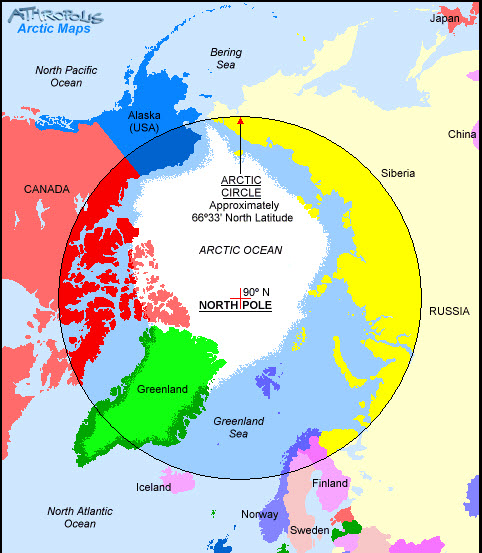
The Arctic Circle is described as an imaginary circle around the Earth and the northern most region in the world3 37 The Arctic Circle can also be defined as locations where the sun does not set on summer solstice and doesn’t rise during the winter solstice The locations that make up the Arctic Circle are parts of Russia, Canada, Alaska, Greenland, Iceland, Norway, Sweden, and Finland.
Figure 1:https://beyondpenguins.ehe.osu.edu/where-does-the-arctic-begin-end
A Brief History of Greenland
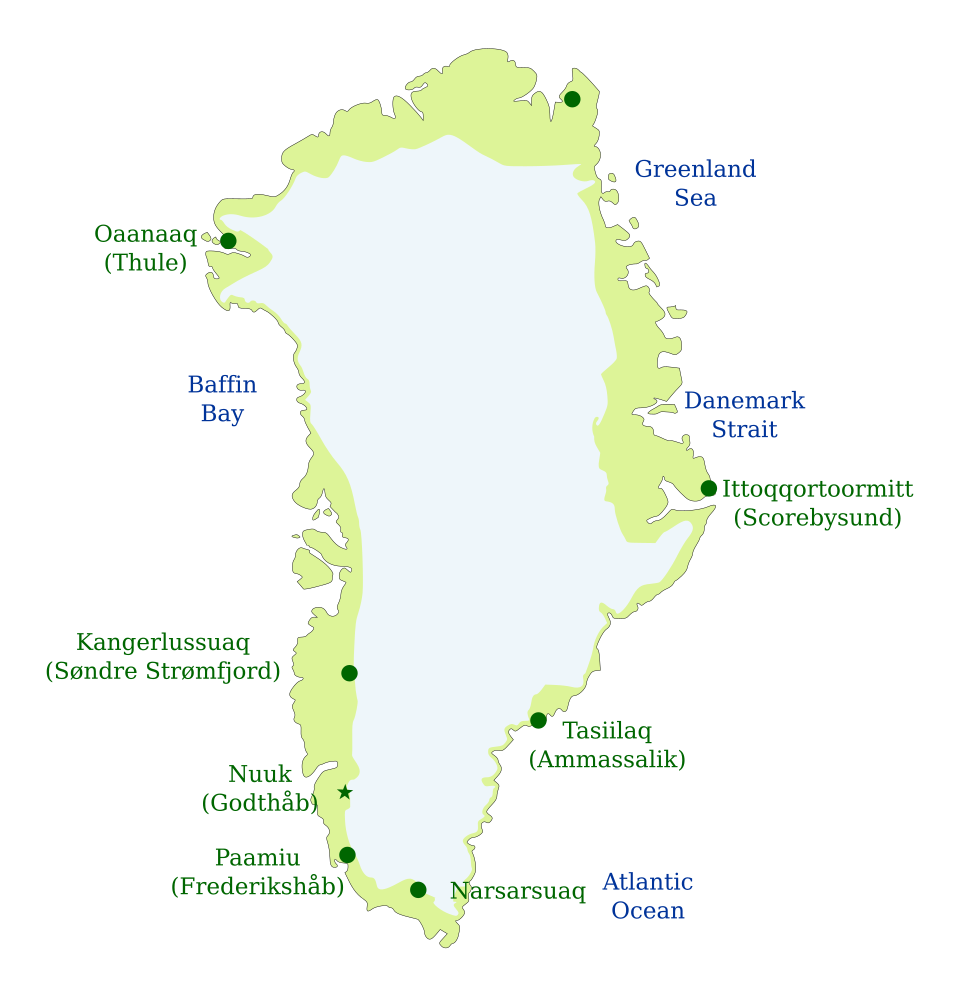
Around 4,500 years ago, the first settlers who reached Greenland were called the Saqqaq and were originally from Siberia. One to two millennia later, the Dorset culture and the Thule people arrived, scattered in different regions. Nowadays, the Thule people are primarily known as the modern-day Inuit culture18. Eventually, the Norse sailed to Greenland, and the captain, Erik the Red, came up with the name to lure other settlers to move there. The Norse had lived there for about 400 years, and it was believed they left because the cold grew increasingly severe. In the 17th century, a Lutheran priest from Norway voyaged to Greenland to spread Lutheranism among the Inuit. In the meantime, the Treaty of Kiel, a peace treaty signed towards the end of the Napoleonic War, was signed when Denmark lost the war. As a result, Denmark had to give up Norway, but was able to keep Greenland. By the time World War II began, Denmark was occupied by Germany, prompting the United States to fear that Greenland would be under German control. As a precaution, the U.S. set up several military bases. Several years after the war, Greenland became a county and gained Danish citizenship29.
Population
Greenland is the world’s largest island, its population is only about 56,000 people. A third of the population lives in Nuuk, the capital. The other main towns include Sisimiut, Ilulissat, Aasiaat, and Qaqortoq. As mentioned previously, the Thule people arrived in Greenland around 1200 AD. Although the Thule people no longer exist, the Inuit are their direct descendants. The Inuit ethnic group is divided into three regions: Kalaallit (West Greenland), Tunumiit (East Greenland), and Inughuit (North Greenland). The population is roughly 89% Inuit of mixed Danish ancestry. The other 11% is Danish or other European heritages32.
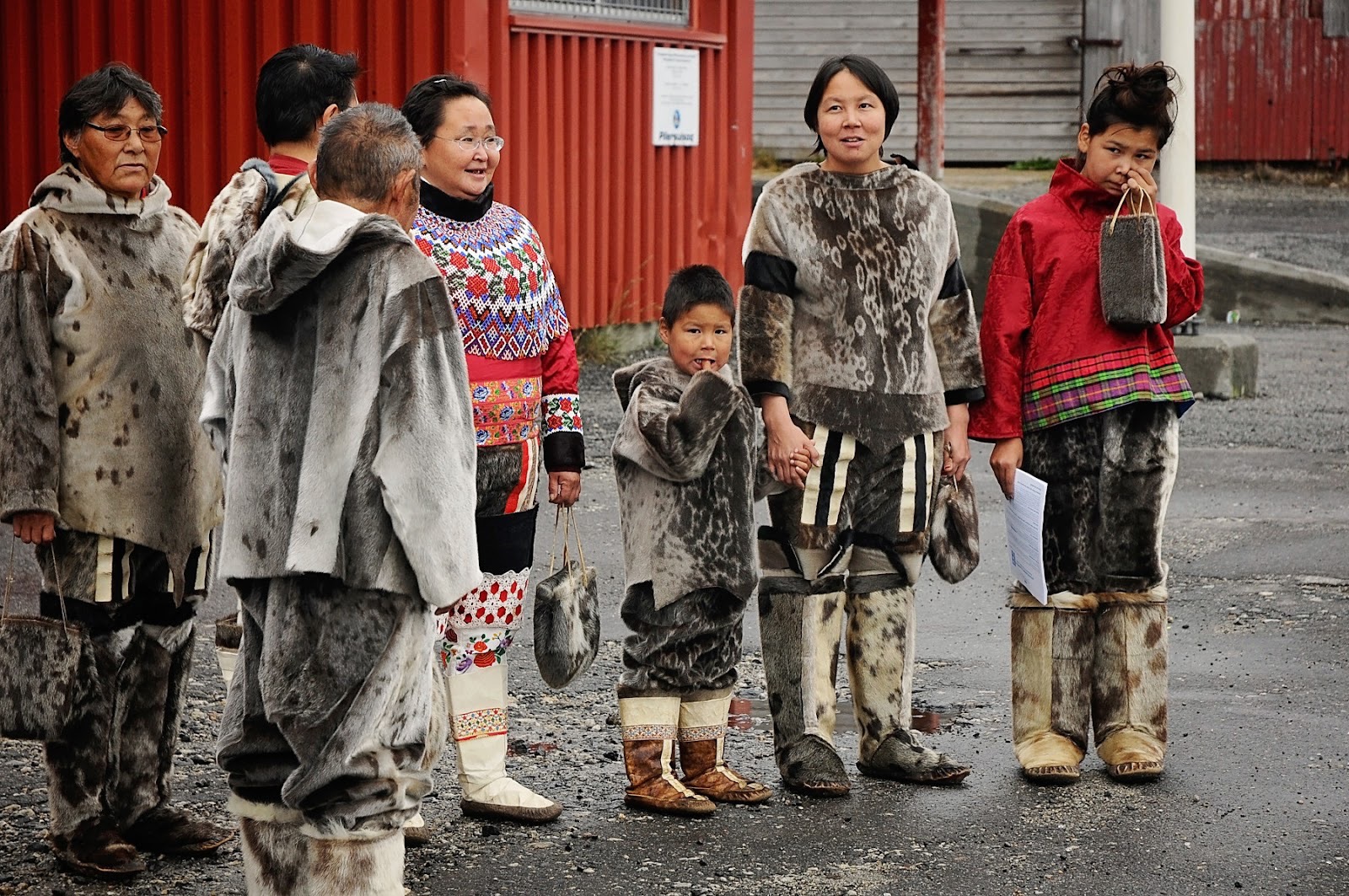
Throughout Greenland, the primary language is Greenlandic, also known as Kalaallisut. Greenland’s language was officially declared the country’s official language in 2009, and approximately 87% of the population speaks it. The rest of the population is fluent in Danish. Many speakers learn English and raise their children to speak Greenlandic, Danish, and English5.
Source 1:https://www.secretatlas.com/handbook/culture-and-history/arctic/greenlandic-inuit
Education
Education plays a crucial role in Greenland’s social and economic development of its citizens. The system is designed to provide students with 10 years of free education, including primary and secondary school. The education system has been in rapid decline, with students dropping out at an increasing rate each year. This ensures that students acquire foundational knowledge to prepare for future endeavors. Most towns and settlements have schools however, some do not. Accessibility plays a significant role in why students drop out. Most education buildings are located in southern Greenland, which creates transportation issues. The main reason students drop out is due to the inaccessibility students have to schools. Throughout all of Greenland, there are only four upper secondary schools. For those who are determined to finish their education, some resort to moving away from their family to continue their studies28.
Another reason as to why students drop out is because of the language barrier. While the official language is Greenlandic (Kalaallisut), most upper secondary schools are taught in Danish. Due to this, students don’t bother attempting to learn another language to receive an education26.
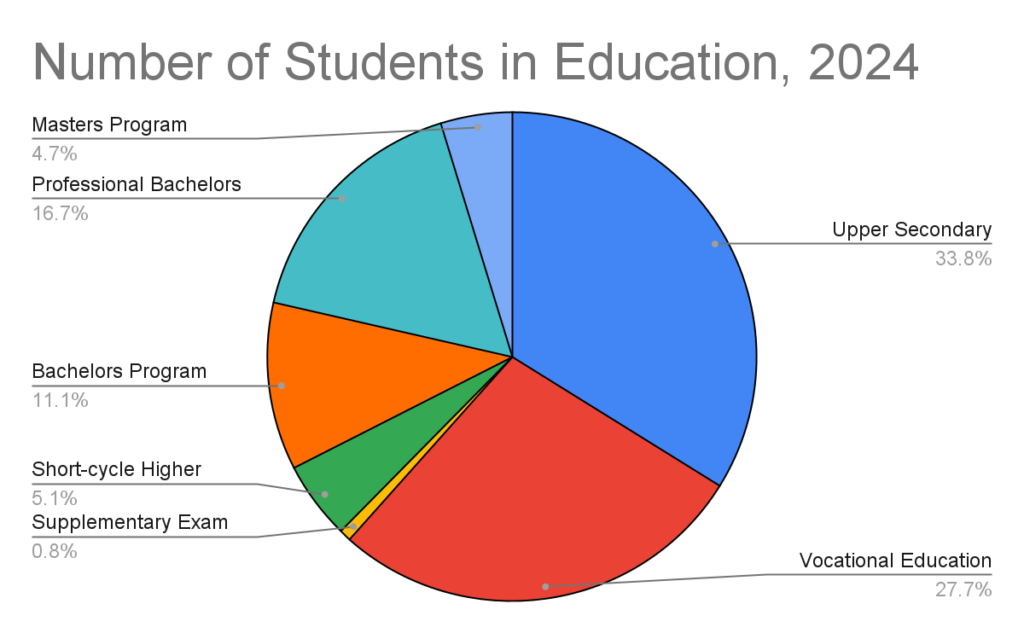
As shown in the pie chart, there is a substantial decrease in the number of students present. By the time students reached secondary school, only 33.8% (1,071) of students remained in school in 202412. Around 38% of students go on to higher education, whether it’s to go to university, study abroad, or short-cycle study. The University of Greenland: Ilisimatusarfik offers various undergraduate and graduate programs. There is also the Inuit Ataqatigiit School of Education for those interested in the education field. Both schools are located in Nuuk, Greenland. These programs collaborate with a few other universities in Europe for students to study abroad to other locations like Denmark, and Sweden. That being said, many students opt to study in other countries to enhance their education6. While education rates are relatively low, Greenland is ranked among the nine countries or territories worldwide with a 100% literacy rate among people ages 15 and older. In contrast, Denmark and the United States are both ranked number 38 and have a 99% literacy rate38.
Government
It is important to acknowledge that Greenland is not an independent country, but rather a Danish territory with its own government, which is also a parliamentary democracy. While the government oversees the majority of domestic affairs, Denmark’s government still retains some control over foreign policy. To support Greenland economically, Denmark supplies a Grant of 600 million dollars each year. These finances go towards services such as the coast guard and law enforcement40. In 2009, the Self-Governing Act was enacted to further define the responsibilities of Denmark and Greenland13 16. This way, Denmark and Greenland can foster an appropriate relationship that allows mutual respect from both sides. The act grants Greenland the right to benefit from its natural resources, such as minerals, gas, and oil. This allows Greenland to control how it uses its natural resources rather than having Denmark receive the funds and resources. Overall, the act declares more economic independence.
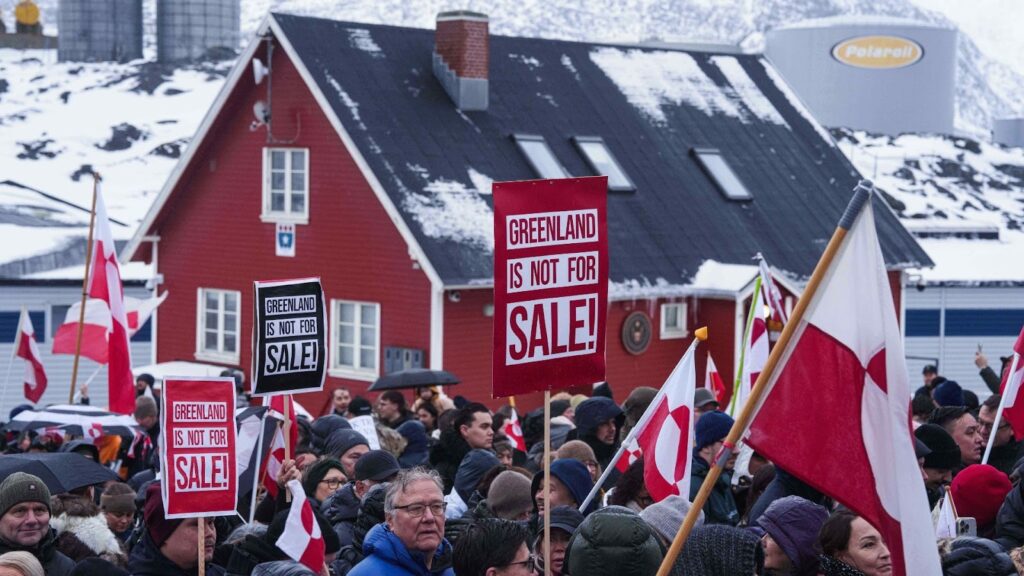
Recently, the president of the United States, Donald Trump, announced that he wants to acquire Greenland. During his first term in 2019, he initially raised the idea; however, Greenland and Denmark immediately shut it down. Now that Trump is in his second term as president, he insists on buying Greenland. It is also believed that Trump wants a hold of Greenland so he can strengthen his influence19 22. Due to Greenland’s location, it is the perfect place to monitor any military threats and protect missiles and air routes. Pituffik Space Base, which was previously known as Thule Air Base, was established as a U.S. military base during World War II. Weather stations and airfields were built to provide a plan for naval movements, flights, and the defense of North America. Greenland is said to have substantial untapped natural resources, such as oil, lead, zinc, and more20. By seizing Greenland, Trump believes the U.S. would not have to rely heavily on foreign suppliers, such as China. As mentioned, Greenland and Denmark rejected Trump’s requests in 2019 and continue to do so in 2026.
Economy
In the 18th century, Denmark colonized Greenland and officially became part of the Danish Realm in 1953. In 1973, Denmark, along with Greenland, joined the European Union (EU). However, just 12 years later, Greenland withdrew from the EU due to disagreements about fishing. Greenland relies heavily on fishing, and the EU was restricting access to its waters. While no longer a part of the EU, Greenland still remains a member of the Overseas Countries and Territories Association (OCTA), which is co-funded by the EU31. OCTA is an organization that serves economic development and sustainability throughout thirteen locations, including Greenland.
Fishing and Shrimping Industry
A common practice in fishing and shrimping, which plays a huge role in Greenland’s economy. Approximately 15% of the population is employed in the fishing industry or in related industries and trade8. In fact, fish and shellfish are the most exported in Greenland, accounting for 90% of total exports9 11. To ensure sustainable fishing, Sustainable Fisheries Greenland (SFG) partners with fisheries and researchers to make sure the ocean is fished sustainably. The SFG also prioritizes sustainably certified fish that are accessible in stores. To check if fish products are sustainable, look for the blue fish of the Marine Stewardship Counsel (MSC) label located on the packaging30.
Whaling Industry
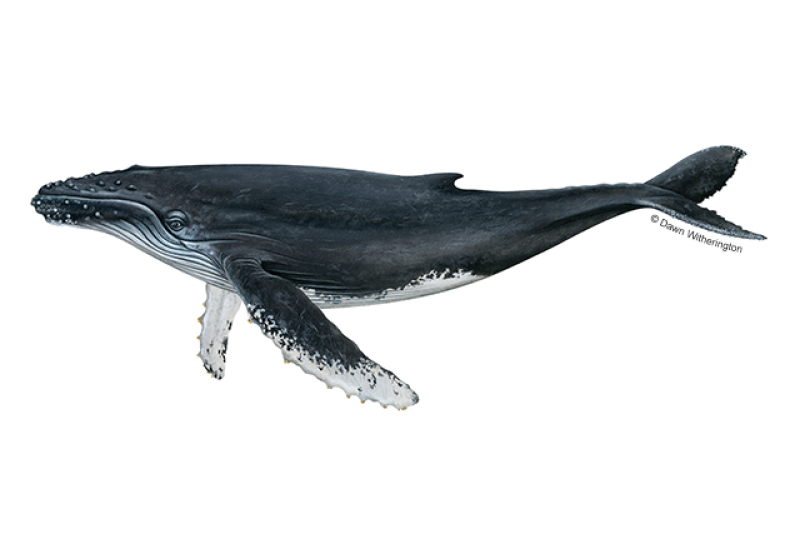
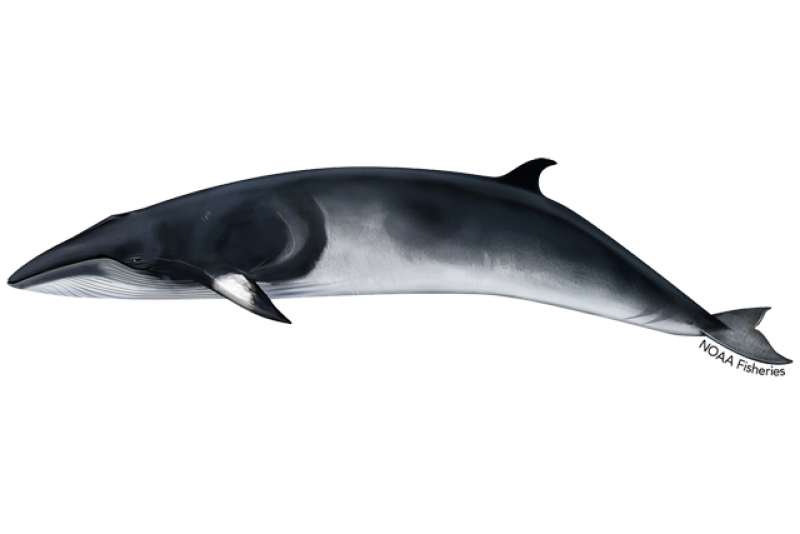
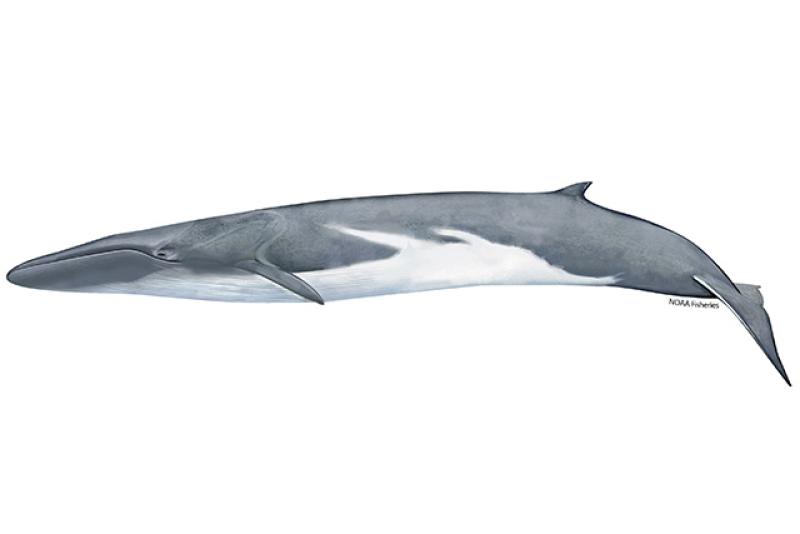
Seafood is a main source of protein in a Greenlander’s diet. Some of the food they consume is fish, whales, and seals. To many, this diet sounds quite unusual, but to the Greenlanders, these foods are a delicacy. As of late, measures have been taken in order to conserve marine life. Whales are traditional food, and the Inuit have hunted them for thousands of years15. In 2010, the International Whaling Commission (IWC) forbade the slaughtering of whales. However, they came to an agreement, and granted permission to the Inuit to slaughter 9 humpback whales each year36. While the Inuit have reached this agreement, in reality, they severely exceed the amount of whales they hunt. In 2018, a documented total of 131 whales were slaughtered including minke and fin whales, which are illegal to hunt in the first place. Whale meat has been discovered in numerous outlets including grocery stores and restaurants. As a consequence, people can lose their gear, license, or even jail time24. Although whale meat is a delicacy, crucial steps must be taken to protect these mammals.

Natural Resources
As discussed earlier, Greenland has substantial natural resources, many of which remain untouched. Over the past 4 billion years, Greenland’s geological history has been key to the territory’s rich resource base1. Throughout its billion-year geological history, Greenland has been pummeled by mountain building, rifting, and volcanism21. The mountains that formed created faults and fractures where excess minerals were deposited. Roughly 200 million years ago, rifting created the Atlantic Ocean, which then formed sedimentary basins. These basins stored excess oil, gas, and other natural resources27. For decades, many companies internationally have attempted to set up mining companies including the United States. No international companies have been successful mainly due to the climate. In 2021, the government banned fossil fuel extraction and exploration, so the likelihood of companies successfully mining is extremely low39.
While all volcanoes in Greenland are now extinct, volcanic activity was present around 60 million years ago. When the volcanoes erupted, they formed deposits of rare-earth elements and other metals. Many of these resources are used in everyday technology, including medical equipment, cars, and phones. The need for rare earth elements has grown increasingly concerning. While rare earth elements aren’t necessarily rare, they are rarely found in economically viable mineral forms. Issues arise regarding rare weather elements that are concentrated into minerals because they are dispersed across the world. This significantly affects the power different locations to control the market and produce them36. Greenland’s rich natural resources is the leading factor Donald Trump wants so much. If Trump gains possession of Greenland, he would have even more economic power In general humans heavily rely on these resources and, as a result, there has been a history of extensive extraction and exploitation. Greenland is covered by approximately 80% of ice, making it difficult to extract these resources11. While it is crucial to conserve the land, many people like Trump would rather destroy it for their own gain.
Healthcare
All civilizations in Greenland have healthcare facilities. While many of them are small clinics, Greenland has five main regional hospitals, including the national hospital, Queen Ingrid’s Hospital in Nuuk. Most citizens have difficulty receiving care due to limited resources.Telemedicine is often used as a convenient resource to receive certain services from different locations in Greenland. It is also a struggle to recruit healthcare professionals because healthcare education in Greenland is extremely limited therefore there is a lack of staff2. In the event that a patient needs to be transferred, the mode of transportation is typically by ship, helicopter, or plane25. For most healthcare treatments and programs, healthcare is publicly funded and free33.
Commitments to Sustainable Living
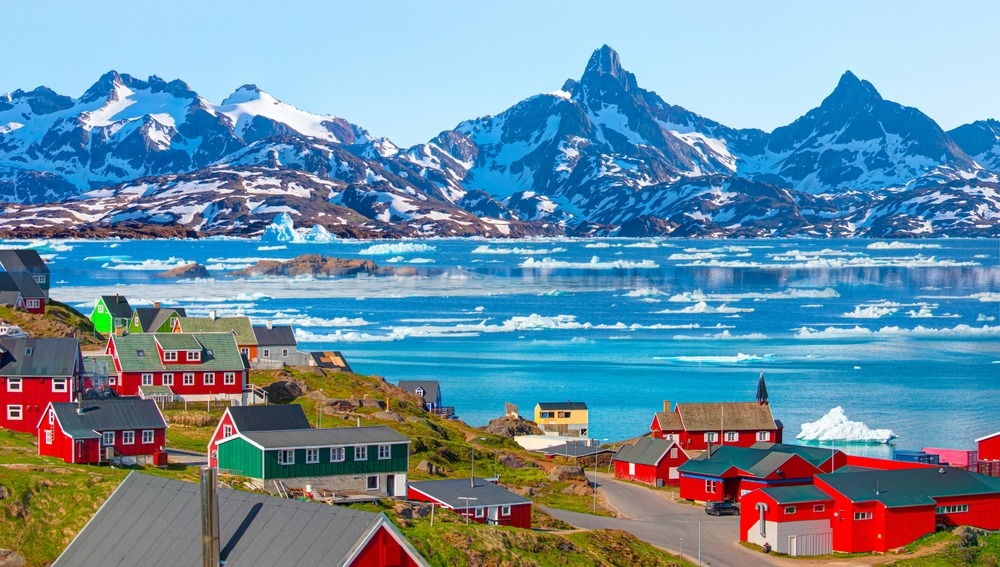
While Greenland continues to incorporate sustainability into everyday life, climate change and other issues continue to rise daily. The government has been working relentlessly to address these challenges head-on for the sake of future generations. In 2021, Greenland’s election, also known as the mining election, passed legislation banning the exploration and mining of uranium at Kvanefjeld34. Doing so would prevent radioactive contamination of water and agricultural products, especially from shearing sheep. While the ban has been praised by many, mining companies such as Energy Transition Minerals (ETM) are furious at it for costing them investment. The company has stated that it will be compensated up to $11.5 billion4. The government has also ended oil and gas exploration, making Greenland the first Arctic nation to do so. Greenland joined the Paris Agreement in 2023, an agreement aimed at reducing greenhouse gas emissions and addressing climate change. This treaty is intended for international purposes, so countries can do their best to limit the effects of carbon emissions globally. By doing so, the government is committed to engaging sustainably with citizens, businesses, and civil society. Since Greenland has its own government, it does not need to rely on Denmark for climate agreements.
Greenland joined the Paris Agreement in 2023, an agreement aimed at reducing greenhouse gas emissions and addressing climate change. This treaty is intended for international purposes, so countries can do their best to limit the effects of carbon emissions globally14. By doing so, the government is committed to engaging sustainably with citizens, businesses, and civil society7 10. Since Greenland has its own government, it does not need to rely on Denmark for climate agreements.
Goals & Objectives
I’m excited to develop a better understanding of Greenland and learn more about why Trump is so adamant about taking it under his control. Greenland’s precious resources make it an easy target for exploitation. Greenland and Denmark have been doing everything in their power to stop the Trump administration. I decided to choose Greenland as my location because of the current headlines Greenland has been making. New events and issues will continue to emerge as I continue this semester-long project.